
CCS1 vs NACS Charging Standards: The 2026 Infrastructure Verdict
North American infrastructure has firmly pivoted to Tesla's NACS, leaving CCS1 as a legacy protocol, while Europe doubles down on the CCS2 architecture.

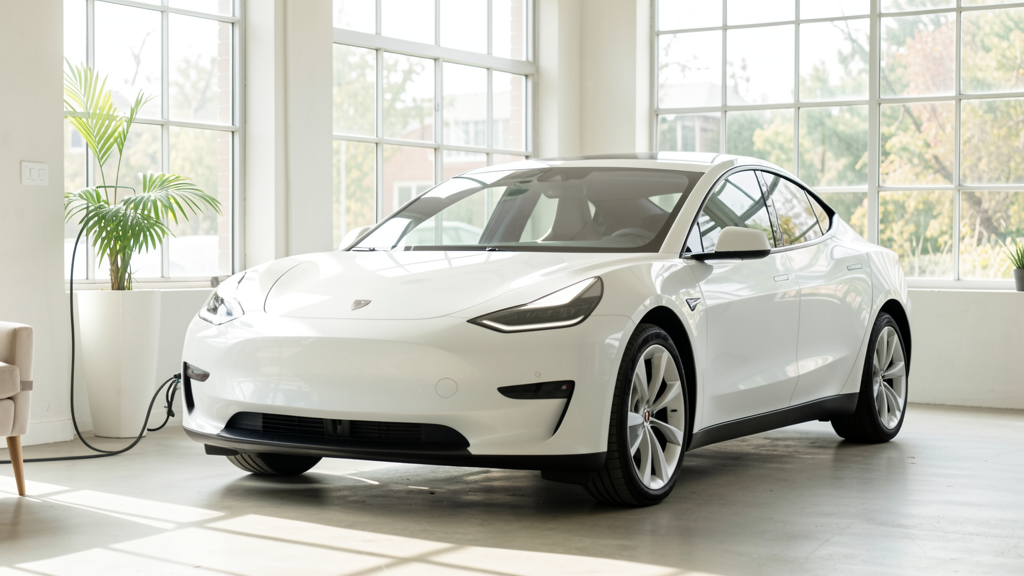
The charging connector war that dominated headlines from 2023 to 2025 has largely reached a conclusion in the North American market, yet the physical hardware on the ground remains a point of significant consumer anxiety. As of 2026, the debate is no longer theoretical. It has materialized into a concrete infrastructure split where the choice of charging standard dictates the reliability of long-distance travel and the future resale value of the vehicle. While the North American market aggressively retools around the North American Charging Standard (NACS), the European landscape remains fortified by the Combined Charging System (CCS), specifically the CCS2 variant.
Consumers looking to purchase an electric vehicle this year face a critical decision between hardware that aligns with the de facto industry standard (NACS) and the遗留 (legacy) hardware (CCS1) that, while still ubiquitous, is effectively a dead end for new development. This analysis evaluates the technical divergences, infrastructural momentum, and regulatory realities to determine which connector offers the most viable long-term ownership experience.
The Physical and Electrical Divergence
The fundamental difference between the Combined Charging System (CCS1) and the North American Charging Standard (NACS) goes beyond the shape of the plug; it lies in the engineering philosophy regarding power delivery and thermal management. The CCS1 connector is a derivative of the SAE J1772 "J-plug" standard, with two large DC pins added below the AC inlet to handle high-speed charging. This design results in a bulky, heavy interface that often requires two-handed operation and robust support cables to manage the weight of the wiring required for 350 kW to 500 kW charging.
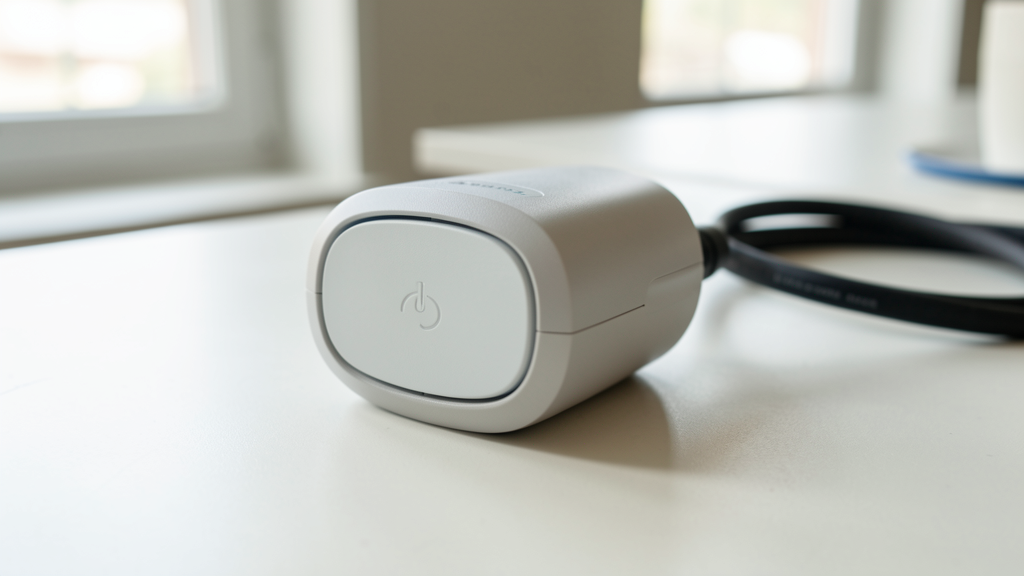
In contrast, the NACS connector—originally proprietary to Tesla and standardized as SAE J3400—was designed from the ground up exclusively for DC rapid charging. It is significantly smaller and lighter. According to the SAE J3400 technical specification sheet released in late 2023, the NACS connector is rated for a maximum current of 500 amperes and voltages up to 1000V. This theoretical ceiling allows for power delivery up to 1 MW, though current vehicles are capped lower. The physical footprint reduction allows for thinner, more flexible cables, which mitigates the "cable spaghetti" issue common at high-power CCS stations.
The liquid cooling requirements also differ. CCS1 cables often require active liquid cooling for the cable itself to manage heat resistance over longer runs to the vehicle, particularly at stations exceeding 350 kW. NACS architecture generally integrates thermal management more efficiently into the handle and the vehicle inlet, reducing the complexity of the station-side hardware. This engineering simplicity contributes to lower maintenance costs for site hosts and higher reliability for end users.
The North American Infrastructure Betrayal of CCS1
The trajectory of CCS1 in North America shifted irreversibly following the Ford Motor Company's announcement in May 2023 to adopt NACS, a move that triggered a domino effect across the industry. By the close of 2025, nearly every major OEM selling vehicles in the United States and Canada—excluding Stellantis and the Volkswagen Group in some capacities—had committed to phasing out CCS1 ports in favor of NACS.
This shift is not merely a manufacturing preference; it is now cemented by federal funding. The National Electric Vehicle Infrastructure (NEVI) Formula Program, administered by the Federal Highway Administration, initially mandated CCS1 connectors for federally funded stations. However, by late 2024, the guidance was revised to require NACS ports or "CCS1 adapters" at every federally funded dispenser to ensure universal access. Consequently, the rollout of new fast chargers in 2026 heavily favors NACS hardware.
Reliability data underscores this infrastructural preference. J.D. Power’s 2025 U.S. Electric Vehicle Experience (EVX) Public Charging Study highlighted a significant gap in functionality between Tesla Superchargers (NACS) and non-Tesla networks (CCS1). The study found that Tesla’s network maintained a success rate above 90%, while the aggregated success rate for CCS1 networks lingered near 70%. The mechanical complexity of CCS1 connectors and the varying software protocols across ChargePoint, EVgo, and Electrify America have historically caused handshake failures and "broken plug" errors. As General Motors and Hyundai owners now access the Supercharger network via NACS or adapters, the usage data continues to favor the Tesla-designed standard.
European Stability and the CCS2 Reality
While North America undergoes a painful and expensive transition, the European market remains a bastion of the Combined Charging System, though specifically the CCS2 variant. It is crucial to clarify that CCS1 (North America) and CCS2 (Europe) are not compatible, despite sharing the same communication protocols (ISO 15118). Europe did not pivot to NACS because the existing AC charging infrastructure relied heavily on the Type 2 (Mennekes) connector. The CCS2 standard is simply a Type 2 connector with DC pins added, allowing for backward compatibility with millions of existing AC charge points.
The regulatory environment in the European Union solidifies this stance. The Alternative Fuels Infrastructure Regulation (AFIR), which came into full force in 2024, mandates CCS2 as the standard for heavy-duty and light-duty fast charging across the continent. There is no regulatory appetite to switch to NACS because it would render the massive base of Type 2 AC wallboxes obsolete without adapters. For a consumer in Berlin or Paris, the "Connector War" is irrelevant; the debate is settled, and CCS2 won.
However, the global divergence creates a complication for trans-Atlantic vehicle logistics or consumers importing vehicles. A North American vehicle equipped with a CCS1 port requires a cumbersome adapter to charge in Europe, and vice versa. As North American automakers switch their production lines to NACS by 2027, the vehicles they export to Europe will likely require NACS-to-CCS2 adapters, creating a permanent friction point for global travelers.
Long-Term Accessibility and the Adapter Bridge
For the consumer standing on a dealership lot in 2026, the question of "which wins" must be filtered through the lens of accessibility. If a buyer purchases a vehicle with a native CCS1 port today, they are relying on the declining availability of CCS1 plugs. While adapter solutions exist—such as the Tesla-to-CCS1 or CCS1-to-NACS units currently manufactured by companies like Lectron—they introduce points of failure.
Dustin Humphries, a researcher covering charging infrastructure, noted in a 2025 industry white paper that passive adapters can prevent the vehicle's thermal management system from communicating effectively with the charger, potentially throttling charging speeds. Furthermore, safety standards regarding the manual handling of heavy adapters have led some networks to discourage their use on high-power dispensers.
The critical factor for 2026 buyers is the "Plug and Charge" capability. The ISO 15118 standard allows the vehicle and the charger to authenticate and bill automatically without a credit card swipe or app. While this works on CCS1, the implementation is fragmented. Tesla’s Supercharger network utilizes a proprietary, seamless version of this on NACS. As legacy automakers integrate NACS ports into their vehicles (starting with the 2026 model year for many brands), they gain native access to this seamless payment protocol.
Conversely, owners of older CCS1 vehicles are stuck in a fragmented ecosystem where a radio-frequency identification (RFID) card or a smartphone app is often required to initiate a session. The friction of charging is a daily quality-of-life metric that should not be underestimated. As the Texas grid case study showed, infrastructure reliability during peak loads is paramount, and networks with standardized, lower-maintenance connectors (NACS) generally perform better under stress.
Does Battery Chemistry Influence the Connector Choice?
An often-overlooked aspect of this debate is the correlation between connector standards and battery chemistries. As the industry shifts toward Lithium Iron Phosphate (LFP) batteries for standard-range models, charging curves are changing. LFP batteries can accept higher sustained charging rates at lower state-of-charge (SoC) percentages compared to Nickel Manganese Cobalt (NMC) chemistries.
This technical capability demands connectors that can handle sustained high current without overheating. NACS, with its superior thermal management and higher current rating (500A vs. the 350A or 500A typical of CCS1 implementations), is better positioned to exploit the charging capabilities of next-generation LFP cells. If a buyer selects an EV with an LFP battery for longevity—a trend dominating the non-luxury segment-pairing it with a connector that limits throughput creates a bottleneck. While current CCS1 stations can handle 350 kW, the physical wear on the connector pins is higher at sustained currents compared to the more robust NACS design.
The Verdict for 2026 Buyers
When weighing the technical specifications, infrastructural momentum, and regulatory realities of the North American market against the European stronghold, the winner depends entirely on the buyer's location. However, for the primary audience of Simplesechique in North America, the verdict is clear: NACS is the superior long-term investment.
The argument for NACS is not an endorsement of Tesla as a car manufacturer, but an acceptance of the J3400 standard as the dominant infrastructure. The transition costs are being borne by the networks and automakers, leaving the consumer with a more reliable, lighter, and more widely available charging interface. Buying a CCS1 vehicle in 2026 is a viable option only for deep discounts on used inventory or specific models where the charging network is limited to local Level 2 AC charging. For any buyer requiring DC fast charging for road trips or daily range replenishment, the native NACS port eliminates the friction of adapters and the risk of network fragmentation.
It is also worth noting the degradation risks associated with inconsistent charging thermal management. A robust connector lock and stable thermal handshake, features intrinsic to the NACS design, contribute to safer battery thermal regulation during high-power sessions.
Ultimately, the "long-term game" favors the standard that minimizes points of failure. The European commitment to CCS2 ensures that standard is not dying globally, but in North America, CCS1 has become a legacy format. A new EV purchase in 2026 should be viewed as a 10-year asset. Within that timeline, it is probable that CCS1-only public chargers will become as rare as CHAdeMO stations are today. Future-proofing the ownership experience requires aligning with the port that will be on the pedestal, not the one that is being phased out. When performing a pre-purchase diagnostic on a used EV, the port type should now be a primary valuation factor.
Beyond the Shape: The Software Handshake
The victory of NACS is not merely physical; it signals a standardization of the handshake protocol. As the industry moves toward the "Vehicle-to-Grid" (V2G) future, the complexity of the communication between the car and the grid will increase exponentially. The SAE J3400 standard for NACS was written with these advanced bi-directional protocols in mind, whereas CCS1 standards are often burdened by years of accumulated legacy patches.
The connector that wins the long-term game is the one that becomes invisible to the user. By 2028, the driver should not need to know or care whether they are plugging into an Electrify America stall or a Supercharger; the car should authenticate, negotiate load based on grid conditions, and bill automatically. NACS is currently the closest architecture to realizing this frictionless future in North America. CCS1 remains a relic of a fragmented, experimental era of electrification. For the consumer, the choice is no longer about shape; it is about choosing between the matured ecosystem and the deprecated one.
Sources
To dig deeper and verify the data, see:
Read next
The LFP Shift: Why Non-Luxury EVs Swapped Range for Resilience
The shift to Lithium Iron Phosphate in budget EVs prioritizes safety and cycle life over maximum energy density, fundamentally altering how these vehicles age and charge.

Case Study: How the Texas Grid Handled the EV Winter Demand Spike
An analysis of ERCOT data from the January 2024 freeze reveals that residential heating, not electric vehicle charging, dictated grid stability during extreme weather events.